Ceiling light
UST lenticular screens are commonly designed to absorb much of the light arriving from above while reflecting projector light arriving from below.
A bright-room screen cannot make ambient light disappear, but the right optical structure can stop much more of that stray light from reaching your eyes alongside the image.
Affiliate disclosure: we may earn a commission from qualifying purchases made through product links.
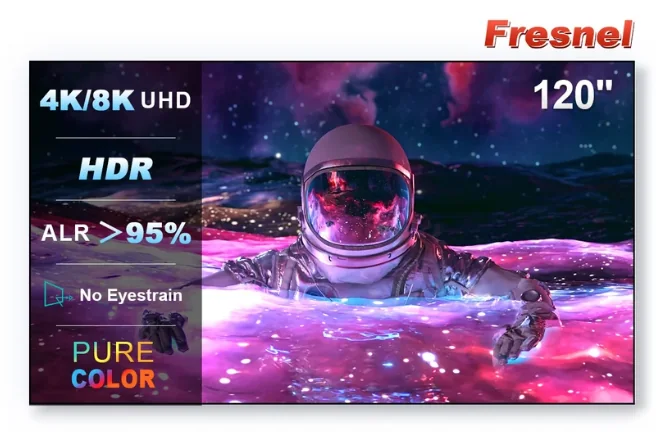
UST lenticular screens are commonly designed to absorb much of the light arriving from above while reflecting projector light arriving from below.
Directional Fresnel structures can be attractive when side light is a persistent problem, but confirm the specific screen's seating behavior.
No projection surface is a magic replacement for light control. Blinds, curtains and positioning still matter when direct sunlight falls on the screen.
Perceived contrast depends on the difference between dark and bright parts of the image. A surface that rejects room light can keep black areas from being lifted toward gray, even if the screen itself looks darker when the projector is off.
That is why evaluating only maximum brightness can be misleading. Daytime picture quality is a balance of useful projector light, ambient-light rejection and black-level preservation.
Check the live NothingProjector product page for today's price, stock and shipping terms.
Check current offer Affiliate link. We may earn a commission.