NothingProjector 120-inch Fresnel screen
Our research-based buyer guide brings the current manufacturer specifications, practical trade-offs and purchase questions into one place—without pretending we personally tested the screen.
Screen Signal is an independent guide to ultra-short-throw projector screens. We focus on the decisions that change real-world results: screen material, ambient-light rejection, gain, viewing angle, size, installation and projector compatibility.
Affiliate disclosure: we may earn a commission from qualifying purchases made through product links.
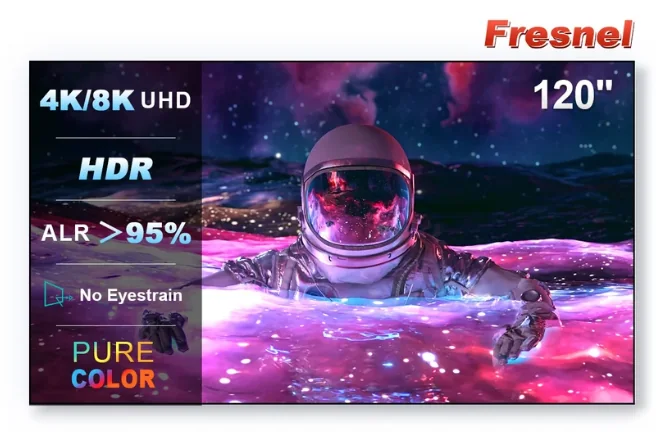
Our research-based buyer guide brings the current manufacturer specifications, practical trade-offs and purchase questions into one place—without pretending we personally tested the screen.
Both are designed to manage ambient light for UST projection, but they distribute light differently. The right choice depends on room brightness, seating width and your preference for brightness versus off-axis viewing.
A 120-inch 16:9 image is roughly 104.6 inches wide and 58.8 inches high. Plan the wall, seating, console and projector geometry before ordering a fixed-frame screen.
This site focuses on ultra-short-throw projectors. UST-specific optical screens are engineered around light arriving from below at a steep angle.
Ceiling lights, windows, side light and daytime use all change which screen structure makes sense.
High-gain directional screens can look brightest from central seats while losing intensity farther off-axis.
Screen dimensions, projector offset, console depth and eye line need to work together before the frame goes on the wall.
Fresnel screens use concentric optical structures to redirect projector light toward the audience while rejecting much of the light arriving from other directions. That can make them compelling for a large-screen living-room setup where a plain wall or matte-white screen becomes washed out.
The trade-off is directionality. A screen that concentrates light toward the viewer can be less forgiving of very wide seating. That is why gain, ambient-light rejection and viewing angle should be considered together rather than as isolated headline numbers.
Check the live NothingProjector product page for today's price, stock and shipping terms.
Check current offer Affiliate link. We may earn a commission.