Fresnel
Uses concentric directional structures. Often chosen for stronger on-axis brightness and multi-directional ambient-light control, with more sensitivity to viewing position.
Ambient light rejecting (ALR) is a category, not one single surface. For UST projectors, the microstructure matters because the image light arrives from a very different direction than it does with a conventional long-throw projector.
Affiliate disclosure: we may earn a commission from qualifying purchases made through product links.
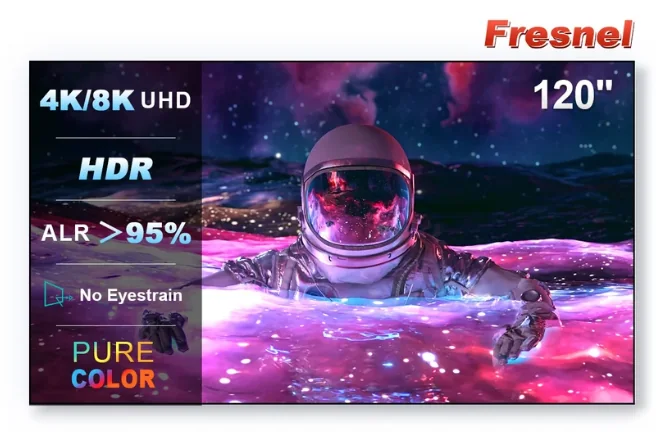
A UST optical screen should preferentially send the projector's steep upward light toward the audience while absorbing or redirecting a meaningful portion of room light. The result can be visibly stronger perceived contrast than a plain wall in a lit room.
This is why “ALR” alone is not enough. A screen made for a ceiling-mounted long-throw projector can reject the wrong light direction when paired with a UST projector.
Uses concentric directional structures. Often chosen for stronger on-axis brightness and multi-directional ambient-light control, with more sensitivity to viewing position.
Uses fine horizontal ridges that favor light coming from below while rejecting much of the light from above. Often provides a broader seating cone.
Can work well in controlled lighting but does not selectively manage UST light and ambient light in the same way as an optical ALR surface.
Check the live NothingProjector product page for today's price, stock and shipping terms.
Check current offer Affiliate link. We may earn a commission.