Choosing a 120-inch screen for a UST projector
At 120 inches, small setup mistakes become big visual problems. The screen must match the steep UST projection angle, stay flat, fit the wall and distribute light appropriately for your room and seating.
Affiliate disclosure: we may earn a commission from qualifying purchases made through product links.
The five filters that matter most
UST-specific surface
Do not assume any ALR screen works with an ultra-short-throw projector. The optical pattern must be designed for light arriving from below at a steep angle.
Ambient-light direction
Ceiling light, windows and side light interact differently with Fresnel and lenticular structures.
Gain
Higher gain can create a brighter central image but usually concentrates the useful viewing cone.
Viewing width
A couple sitting centrally has different needs from a large group spread across a wide room.
Why the NothingProjector 120-inch Fresnel enters the shortlist
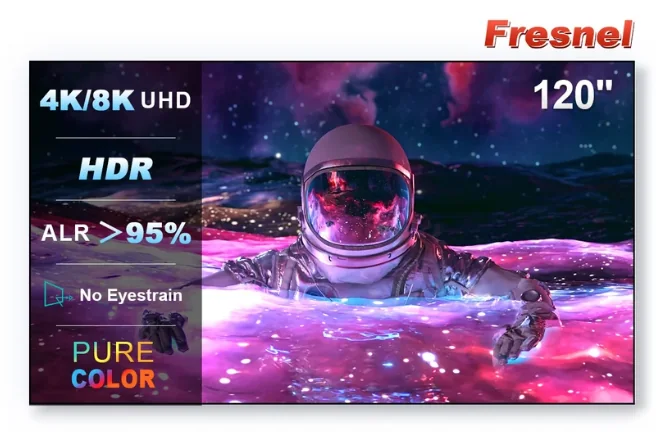
Its current specification set is unusually focused on bright-room UST use: Fresnel PET material, manufacturer-listed 1.2 gain, 95% ambient-light-rejection claim, fixed-frame construction and a 120-inch image area listed at 2657 × 1494 mm.
That combination is most compelling when you want a TV-like large format in a room that cannot stay dark all day.
Check current offerWhen it may not be the right screen
If you need retractability, have very wide seating, or mostly watch in a fully controlled dark room, a different material or screen format can make more sense. The best 120-inch screen is the one that solves your room's actual constraints.